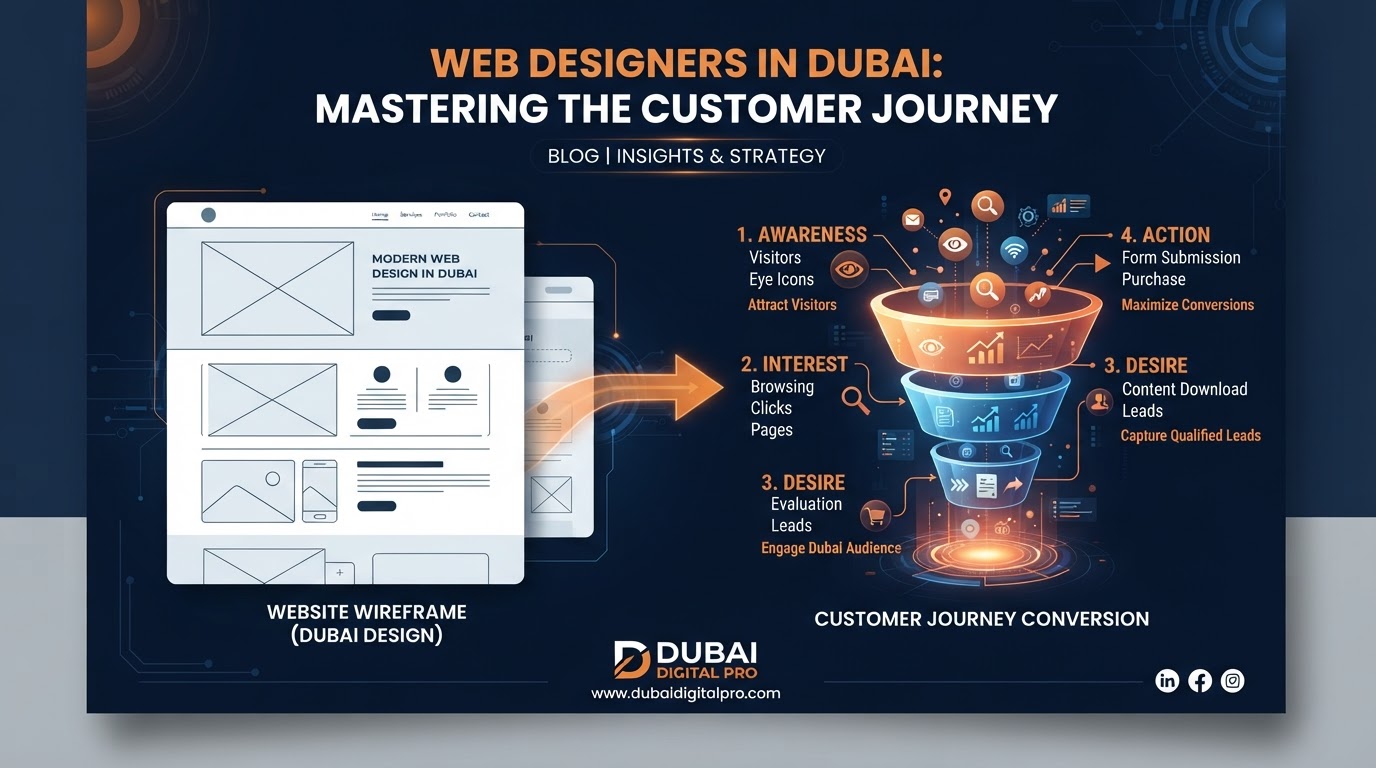
Website Designers Dubai: How Customer Journeys Drive Real Conversions
Most websites look fine. They have a clean layout, a logo, some service pages, and a contact form buried at the bottom. But they don't actually work. Visitors land, look around, and leave without taking action. If that sounds familiar, the problem usually isn't your product. It's the order in which you present information to people.
This is exactly where the website designers Dubai take a different approach. Instead of starting with how the site looks, they start with how customers think.
What a Customer Journey Actually Means for Your Site
A customer journey maps every step a person takes from the moment they first hear about your business to the moment they decide to contact you or buy. Good designers map this journey before any design work begins.
Why the Journey Comes Before the Design
Think about how someone finds your site. They searched for a problem they have. They land on a page. Within about three seconds, they decide if you understand that problem. If your site leads with your company history instead of their pain point, most of them click away.
Customer journey thinking flips this. Each page, each section, and each call to action lands in place based on what a visitor needs to see next, not what the business wants to say first.
How Website Designers Dubai Build for Conversion
The process starts with defining your audience. Who are they? What are they searching for? What objections might stop them from picking up the phone? Once you answer those questions, the site structure falls into place naturally.
A typical journey-led site does a few things differently:
- It opens by speaking directly to the visitor's problem.
- Proof comes before they ask, so credibility builds early.
- Friction drops at every decision point, with fewer form fields and clearer next steps.
- Calls to action appear only where the visitor is genuinely ready to act.
The Gap Between Looking Good and Converting
A beautiful site that confuses visitors converts at a fraction of the rate of a simpler site that guides them clearly. This is a trade-off many businesses don't realize they're making. Because most site owners judge their site like a visitor on day one, not like someone who has seen it a hundred times and knows exactly where everything is.
Journey-led designers test assumptions. They look at the data and then adjust. Heatmaps, session recordings, and conversion tracking all feed back into the design, so the site improves over time.
Pairing Your Website with the Right Traffic Channels
A conversion-focused website works much harder when it's paired with the right traffic sources. For many businesses, that means running Google Ads in Dubai to reach people actively searching for your service, or using social media advertising to build awareness among the right audience before they even know they need you.
The site and the traffic strategy need to match. A great site with the wrong traffic still won't convert. And sending great traffic to a poorly structured site wastes money.
What to Look for When Choosing Website Designers Dubai
Not every agency builds with conversion in mind. Some prioritize aesthetics. Some hand you a template with a fresh coat of paint. The questions worth asking before you commit are simple: Do they ask about your customer before designing? Do they track results after launch? Can they explain why each section exists?
The best website designers Dubai treat your site as a sales tool, not a branding exercise. The design should always serve the strategy, not the other way around.
A genuinely well-built site keeps working for you long after the project closes. It pulls in the right visitors, earns their trust quickly, and gives them a clear reason to reach out.
Ready to build a site that actually converts? Get in touch with Webshure today and tell us what your customers need to see.
Ready to Accelerate Your Growth?
Let's discuss how a customer journey-led website can drive high-quality leads to your business in Dubai.
